Evidence before assertion
A CBI grounding leaves a mark. The case is what the file can prove, and the file is built for a court that will read it years later.
A thirty-year record in the Indian Police Service, read from the beginning: where Narasimha N. Komar came from, what he has been asked to do, and how he goes about it.
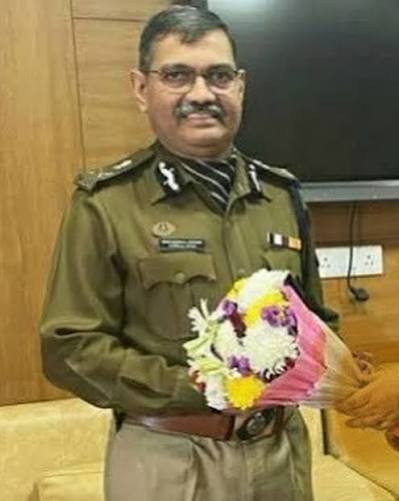
Narasimha N. Komar entered the Indian Police Service in September 1996, a direct recruit through the Union Public Service Commission examination, and was allotted to the Gujarat cadre. He came to it from Karnataka and from an engineering education — a first degree in electrical engineering, followed by postgraduate study — which is an unusual foundation for a police career and, three decades on, an unusually useful one.
Almost the entire career has been served in Gujarat, with one significant exception. For around seven years he was on central deputation to the Central Bureau of Investigation under the Government of India. Central investigation work has its own grammar: cases that run for years, evidence assembled across jurisdictions, and a standard of documentation that has to hold up long after the officers who started the file have moved on.
Back in Gujarat, he served at the state police headquarters in Gandhinagar, rising to Additional Director General of Police. It was in that period that the engineering background stopped being biographical detail and became the job. He was made chairman of the task force behind VISWAS — Video Integration and State Wide Advanced Security — the programme that put a connected camera network, district command centres, body-worn cameras and drone systems across the state.
That work has been presented as a national example. At the Department of Administrative Reforms and Public Grievances conference on best practices, he addressed the session on Government of Gujarat initiatives as chairman of the VISWAS task force and Commissioner of Police, Vadodara.
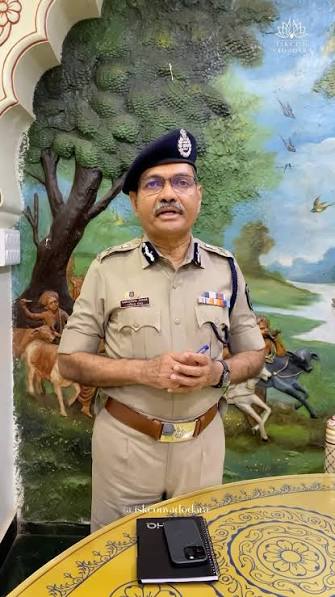
On 16 April 2024, a day before Ram Navmi, he took charge as Commissioner of Police, Vadodara City. He arrived describing the city plainly and with evident regard — central Gujarat's most significant city, culturally rich, and an industrial and service centre sitting on the Mumbai–Delhi economic corridor. The brief he set out on day one was equally plain: hold the traditional ground of policing while building real capacity against cyber and financial crime, and secure a general election and a major religious procession within the same fortnight.
In January 2026 he was elevated to the Director General grade while continuing to command the Vadodara City commissionerate.
He holds the Police Medal for Meritorious Service, awarded in 2012, and the President's Police Medal for Distinguished Service, awarded in 2022 — the two career decorations of the Indian police, given for length and quality of service rather than for a single act.
Approach
Read across an investigation career, a technology programme and a city command, and the same instincts keep reappearing.
A CBI grounding leaves a mark. The case is what the file can prove, and the file is built for a court that will read it years later.
VISWAS is not a device; it is thirty-four command centres, an integration layer and a set of standard procedures. Capability that survives a transfer order.
On taking charge in Vadodara he named cyber and financial crime as the growth area before anyone asked. Stated priorities are easier to be held to.
Road safety and drug awareness are run as campaigns the city takes part in, not advisories the police issue at it.
In short
An engineer by training, an investigator by formation, and an administrator by the length of the posting list — running a city force that has to be equally good at a procession route and a phishing trail.